Crate Training & Calm Foundations: Raising a Settled, Confident Puppy at Home

Updated: Feb 22

Crate training is often misunderstood. At Turtle Island, we do not view the crate as confinement — we view it as a tool for safety, regulation, rest, and learning. When introduced early and used thoughtfully, a crate becomes a place of comfort where a puppy can settle, observe, and learn how to exist calmly within the home.
This guide is designed to help families understand how we introduce crates, how to continue that foundation at home, and why structure and rest are essential for raising a confident, balanced dog.
Part One: Early Crate Introduction — The Turtle Island Approach
Our puppies remain with us until eight weeks of age, and we use those early weeks intentionally to prepare them for life beyond our home.
With the approval of puppy parents, we begin introducing crates around six to seven weeks of age, during a stage when puppies are naturally curious and receptive to new experiences.
Weeks 6–7: Open, Positive Exposure
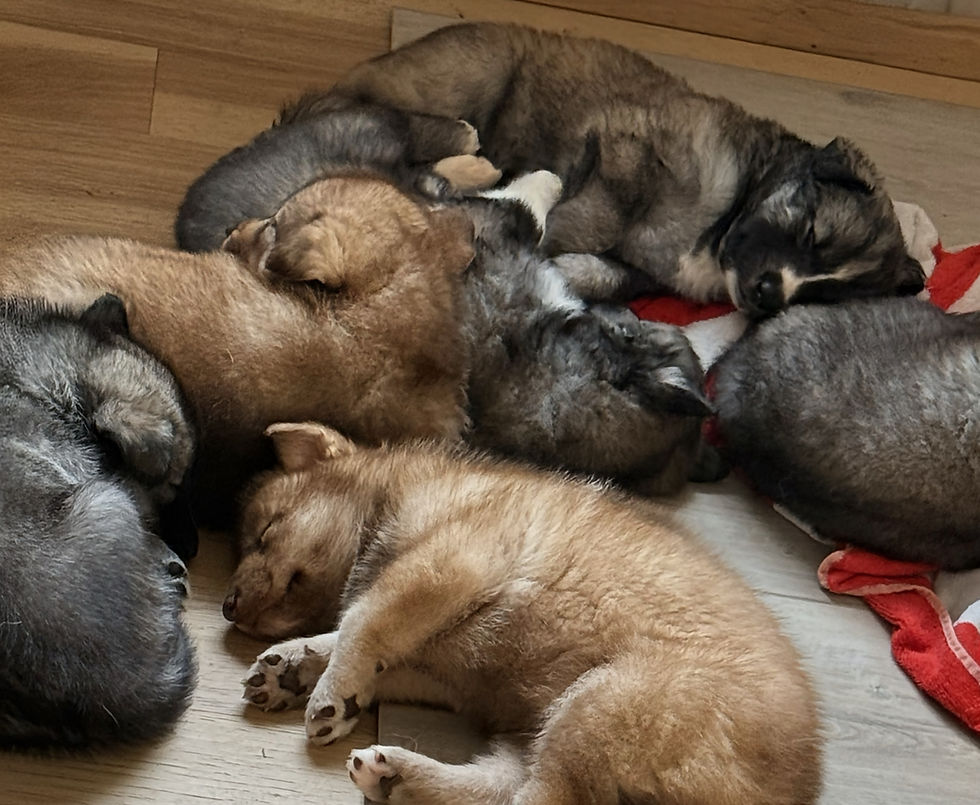
Crates are introduced with doors open, soft bedding inside, and littermates nearby. Puppies are encouraged to explore freely, snuggle together, and move in and out at their own pace. Treats and gentle encouragement are used so puppies begin forming positive associations. At this stage, crates are never locked — the goal is comfort, familiarity, and trust.
Around Week 7: Brief, Gentle Practice
As puppies grow more confident, we begin closing the crate door for very short periods — just a few minutes at a time — and then opening it again. Each experience is kept calm and successful, helping puppies understand that the crate is safe and temporary.
By the time puppies go home at eight weeks, the crate already represents rest, safety, and calm, making the transition into a new home much smoother.
When Puppies Come Home — Structure, Rest, and Balance
When your puppy arrives home, it’s natural to want them out with you all the time — playing, cuddling, exploring, and bonding. Those moments matter. But so does rest.
Young puppies require 18–20 hours of sleep per day for healthy brain development, emotional regulation, and growth. When puppies don’t get enough rest, their behavior can quickly shift from playful to wild, unruly, or overly mouthy — not because they’re “bad,” but because they’re overtired.
This is where the crate becomes one of your most valuable tools.
Crate time should be viewed as rest time, not removal. Puppies need breaks from stimulation just as much as they need interaction. Too much freedom too soon often leads to overstimulation, poor impulse control, and frustration for both puppy and family.
Using the Crate to Support Rest and Regulation
When your puppy becomes overly excited, nippy, or unable to settle, it’s often a sign they are tired and need help regulating themselves.
In these moments:
Calmly place your puppy into their quiet crate
Ensure their basic needs have been met (potty, water, comfort)
Close the door and allow them time to settle
Puppies will often fuss at first — and that’s completely natural. No puppy wants to be removed

from what they were doing, separated from people, or placed somewhere quieter when ther is still excitement happening around them. When they protest, they may cry, vocalize loudly, or do whatever they can to get your attention and be let back out. What ma most in these moments is how you respond. This is not distress — it is frustration. Giving in teache
a puppy that noise works. Staying calm and consistent teaches them thatquietbrings freedom
The Key to Crate Success: Consistency and Calm
This stage of crate training is not about the puppy — it’s about the human.
Be firm and calm, not emotional
Do not let noise dictate your response
Avoid letting a puppy out while they are vocalizing
If a puppy learns that barking or crying brings release, they will simply become louder. When they learn that calm, quiet behavior opens the door, they begin to self-regulate.
Sometimes the best thing you can do is step into another room and allow your puppy the space to settle. This is not neglect. Your puppy is safe, secure, and learning an important life skill.
This is not a baby — it is an animal learning boundaries, rhythm, and expectation. As long as your puppy is safe and has had the opportunity to potty, it is okay to walk away.
Calmness brings freedom. Chaos does not.
A Real-Life Perspective on Crates
Crates can be a touchy subject. We understand that — because we didn’t always use them consistently ourselves.
We’ve left dogs home loose in the house. Sometimes it worked. Other times, it didn’t.
We’ve come home to chewed furniture, destroyed belongings, doors scratched, and dogs getting into the fridge and helping themselves. Not because they were bad dogs — but because they were anxious, bored, or deeply uncomfortable being alone.
What we’ve learned is simple:
Some dogs are perfectly content being left loose.
Other dogs hate being away from you so much that they act out.
Neither dog is wrong.
But if you plan on leaving your dog home alone in your house, we highly recommend crate training. A crate gives dogs who struggle with separation a safe place to settle instead of panic. It protects your home — and more importantly — it protects your dog.
Crate training isn’t about control.
It’s about understanding the dog you have and setting them up to succeed.

For more puppy training tips and helpful information about bringing your puppy home, be sure to visit the blogs at cornmoonkennels.com and indianvalleykennels.com — there’s a lot of great insight there. Check it out!


Comments